
Table Of Contents
- What Are Kidney Stones?
- How Laser Treatment for Kidney Stones Works
- Types of Kidney Stone Laser Surgeries
- Advantages of Laser Surgery for Kidney Stones
- Side Effects of Laser Surgery for Kidney Stones
- How Can AINU Provide the Best Laser Treatment Procedures for Kidney Stones?
- Final Words
- Frequently Asked Questions
Kidney stones can cause excruciating pain and discomfort, which may hamper one’s quality of life. Kidney stones are small, hard, crystal-like deposits found inside one’s kidneys formed due to mineral buildup in the urinary tract. Dehydration, weight loss surgery, obesity, inflammatory bowel diseases, and eating foods that are too salty are some of the many causes of kidney stone formation.
If left untreated, kidney stones can result in severe health conditions; in fact, one can hardly bear the intense pain! Fortunately, certain surgical procedures can treat kidney stones and aid in removing them with minimal invasion, thanks to modern medicine. We will discuss the advantages of laser surgery for kidney stones and how the process works. In the end, we have also added some frequently asked questions about lasers for kidney stones.
What Are Kidney Stones?
Kidney stones are hard salt and mineral deposits that can be formed in the kidneys for numerous reasons. For instance, leading a sedentary lifestyle, following an unhealthy diet, not drinking enough water, and taking certain minerals in excessive amounts can create kidney stones in the urinary tract.
Some common signs of kidney stones include severe pain in the side or back, vomiting, nausea, blood in urine, and an urgent need to urinate. Smaller kidney stones may be passed out of the urinary tract through medications. However, individuals with larger stones might need to undergo surgery to get rid of them.
How Laser Treatment for Kidney Stones Works
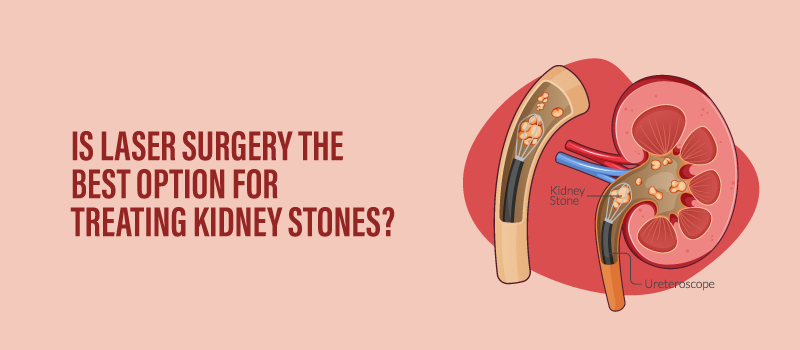
Kidney stone laser treatment, or lithotripsy, is a procedure that helps break down kidney stones into tinier fragments using minimal invasion. As a result, it allows the stones to pass through the urinary tract easily. Lithotripsy is beneficial for people with large and hard stones that are difficult to pass naturally.
A kidney stone laser treatment procedure is performed by a certified urologist, who uses a specialized laser that emits concentrated energy waves to break down the crystals. The surgery is usually performed under sedation or general anesthesia. The laser targets the stones in the ureter or kidneys to ensure their fragmentation.
Once the large stones are broken down, they can be passed through urination naturally, or the urologist may use a special tool called a ureteroscope. It is a thin tube inserted through the bladder and urethra to remove them safely. The urologist may also place a stent in the ureter temporarily if they feel the need to. It prevents any possible blockages while the stone pieces are being flushed out from the body, ensuring smoother urine flow.
Types of Kidney Stone Laser Surgeries
There are two types of laser surgery for kidney stones: Holmium Laser Lithotripsy and Thulium Laser Lithotripsy.
- Holmium Laser Lithotripsy: Being one of the most common laser surgeries, Holmium Laser Lithotripsy effectively aids in breaking down kidney stones of diverse sizes. It uses energy pulses to treat ureteral stones and is considered an effective procedure for urolithiasis management.
- Thulium Laser Lithotripsy: It is a smarter and more modern technology known for its high efficacy and precision in fragmenting kidney stones. This procedure can generate smaller specks of stone dust by delivering high-power beams.
Advantages of Laser Surgery for Kidney Stones
Here are the benefits of undergoing laser treatment to flush out kidney stones.
- It involves a minimally invasive procedure.
- It ensures faster and more natural recovery than traditional stone removal surgeries.
- It can treat and remove stones of various sizes.
- The patient will experience less pain and discomfort during and after the surgery.
- It has high success rates.
- It comes with lower risks of the stone fragments blocking the ureter.
- Laser surgery involves reduced bleeding and inflammation, as it involves gentle healing of the tissues.
Side Effects of Laser Surgery for Kidney Stones
You may experience the following side effects of laser surgery for kidney stones.
- A burning sensation while urinating
- Pain in the area where the stone was treated and the lower back or sides
- Feelings of fatigue and nausea
- Blood in urine (it may persist for a few days after the surgery)
- Fever or chills
- Bruising on the back or sides
- Having a sudden urge to urinate
- Gas cramps or constipation for up to a few days
Your urologist may recommend you rest as much as possible after undergoing the laser procedure. You must also avoid participating in sports activities or vigorous exercise for up to a week. Also, you should keep yourself hydrated by drinking sufficient fluids. Besides taking the prescribed medications, consider taking a warm bath to avoid infections.
How Can AINU Provide the Best Laser Treatment Procedures for Kidney Stones?
AINU takes utmost care to maintain precision in surgical procedures. We house certified and experienced urologists and nephrologists to address the urological issues in both genders. AINU uses state-of-the-art technologies to leverage smart tools and advancements in medical research and development.
Final Words
We hope the article helped you understand kidney stones and how laser surgery works. It is one of the most preferred procedures to remove kidney stones of varying sizes. Also, keep in mind the risks of laser surgery for kidney stones and discuss with your urologist to determine whether laser treatment is the right solution for you.